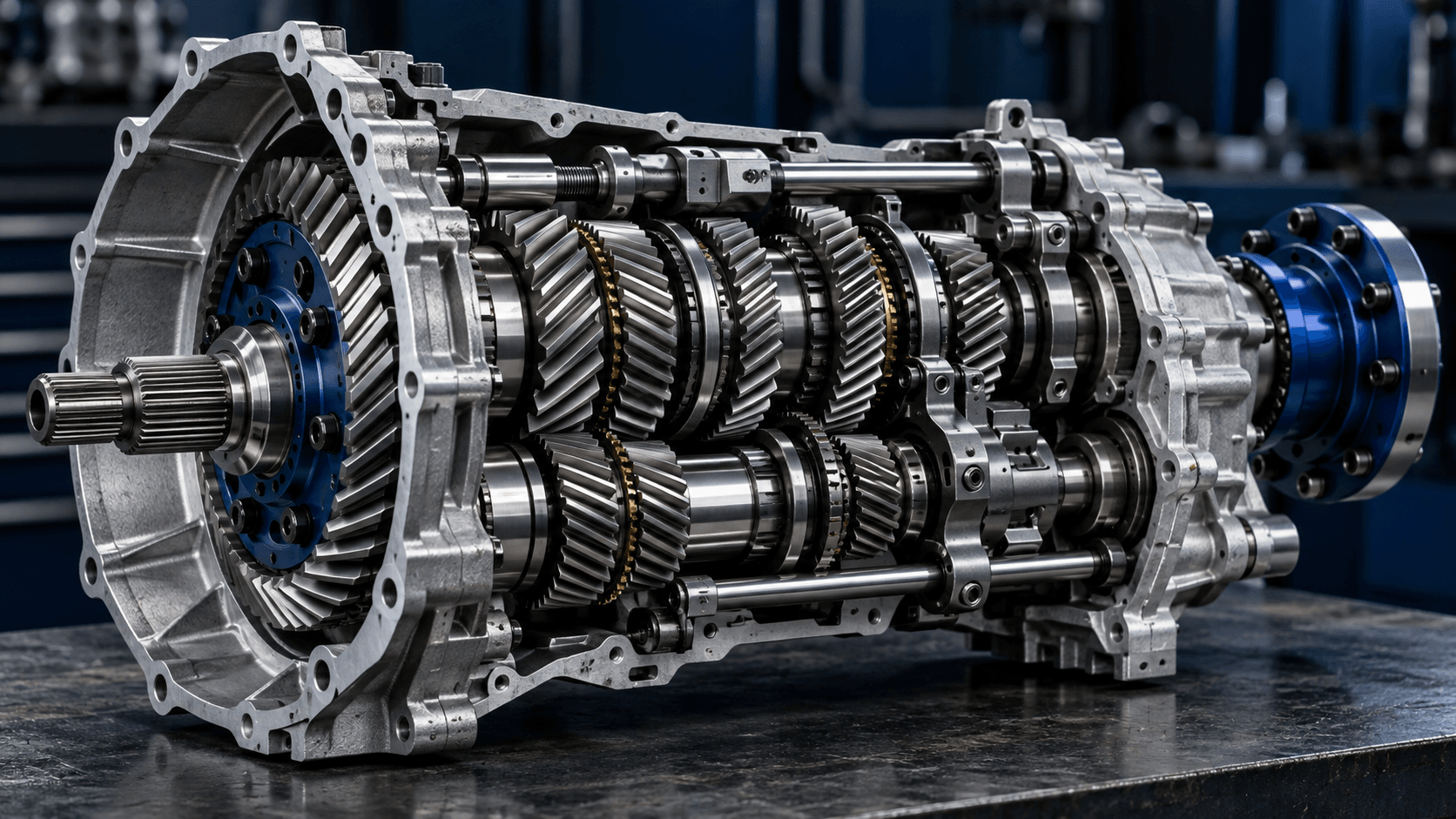
Gear Ratio Calculator
Find your final reduction. Compare gearing for speed and torque multiplication.
Calculate Gear Ratio
From the kart paddock to the drag strip — explore calculators, setup guides and reference data to understand your build.
Everything you need to calculate, compare and understand performance.
Editorial selections from the toolbox.Find your final reduction. Compare gearing for speed and torque multiplication.
Calculate Gear Ratio
Calculate theoretical kart speed from engine RPM, sprockets and tire size.
Calculate Kart Speed
Explore empirical elapsed-time and trap-speed estimates from power and weight.
Calculate Quarter Mile
Compare tire dimensions, sidewall height and geometric circumference.
Calculate Tire Size
Connect torque, engine RPM and power with a transparent calculation.
Calculate Torque to Horsepower
Estimate chain pitches, even link count and center-distance adjustment.
Calculate Chain LengthWhether you race on track, off-road or on the street, find the math behind your setup.



Practical engineering guides, worked examples and performance insights.
PERFORMANCEMore reduction increases ideal wheel torque for a given engine torque, while lowering wheel speed at a given engine RPM. Neither relationship alone predicts lap time.
ENGINEERINGFor a compound jackshaft, multiply the engine-to-jackshaft reduction by the jackshaft-to-axle reduction. Two sprockets fixed to one shaft share RPM.
 RACING BASICS
Torque measures turning moment. Power measures work per time and equals torque multiplied by angular speed, so RPM is essential when converting one to the other.
Reference charts and useful engineering tools for racers and builders.
Use clear formulas and worked examples to make better-informed setup decisions.
Yes. All 36 calculators are free and require no account. Copy results or share a link containing your inputs.
It describes wheel travel at an entered RPM. Available power, traction, drag and slip determine whether that operating point is attainable.
Yes. Input controls convert between unit systems; results always state their units. Road-speed tools include MPH and KPH.
Divide driven teeth by driving teeth: 60 rear teeth ÷ 12 front teeth = 5:1. Multiply any additional reduction stages.
Physics formulas and standard unit conversions follow authoritative references from NIST (Guide for SI Units), OpenStax Physics and NOAA Weather Equations. Read our detailed Calculation Methodology & Sources.